Manhole Cover Weight: The Engineering Code Behind the Numbers and LZB Metal's Lightweight Revolution
In the vast infrastructure network of modern cities, the weight of a manhole cover is never an arbitrary design parameter but an engineering synthesis resulting from the comprehensive interplay of load rating, material science, structural mechanics, and installation/maintenance convenience. According to the European Standard EN124 and the Chinese National Standard GB/T 23858, manhole covers are classified into six load ratings from A15 (1.5 tonnes) to F900 (90 tonnes), with each level's weight carrying specific engineering missions . Taking the most common D400 class (suitable for urban arterial roads, load capacity 40 tonnes) as an example, a round cover with a 600mm diameter typically weighs between 50-80kg, while an ultra-heavy-duty F900 cover (for airport runways and port terminals) with a 900mm diameter can weigh over 150kg . This seemingly simple number embodies a profound commitment: the safety assurance for workers below, the confidence to withstand vehicle loads passing above, and the careful consideration given to the ease of operation for installation and maintenance personnel.
As a leading enterprise in China's manhole cover industry, the weight design of LZB Metal products reflects the outstanding results of systematic engineering optimization. Unlike ordinary manufacturers who simply increase wall thickness to enhance load-bearing capacity—a "crude approach"—LZB Metal's advantage lies in achieving the perfect unity of "lightweight and high load-bearing" through material enhancement at the source, topological optimization of structural mechanics, and precision manufacturing processes. Taking LZB Metal's D400 class 600mm square cover as an example, its weight is controlled within 52-58kg, 10-15% lower than similar products from internationally renowned brands (such as the EPD-certified 61kg) , while its load-bearing capacity and service life exceed standard requirements. This is not merely a change in weight numbers but a qualitative leap from a "cost expenditure" to a "value asset."Manhole Cover Weight Comparison: LZB Metal's Differentiating Advantages
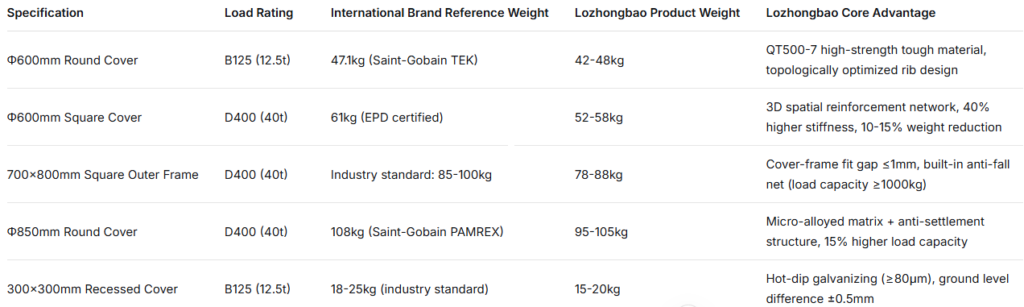
Five Core Advantages of LZB Metal's Manhole Cover Weight Design
I. The "Strength and Toughness" Advantage of Material Source
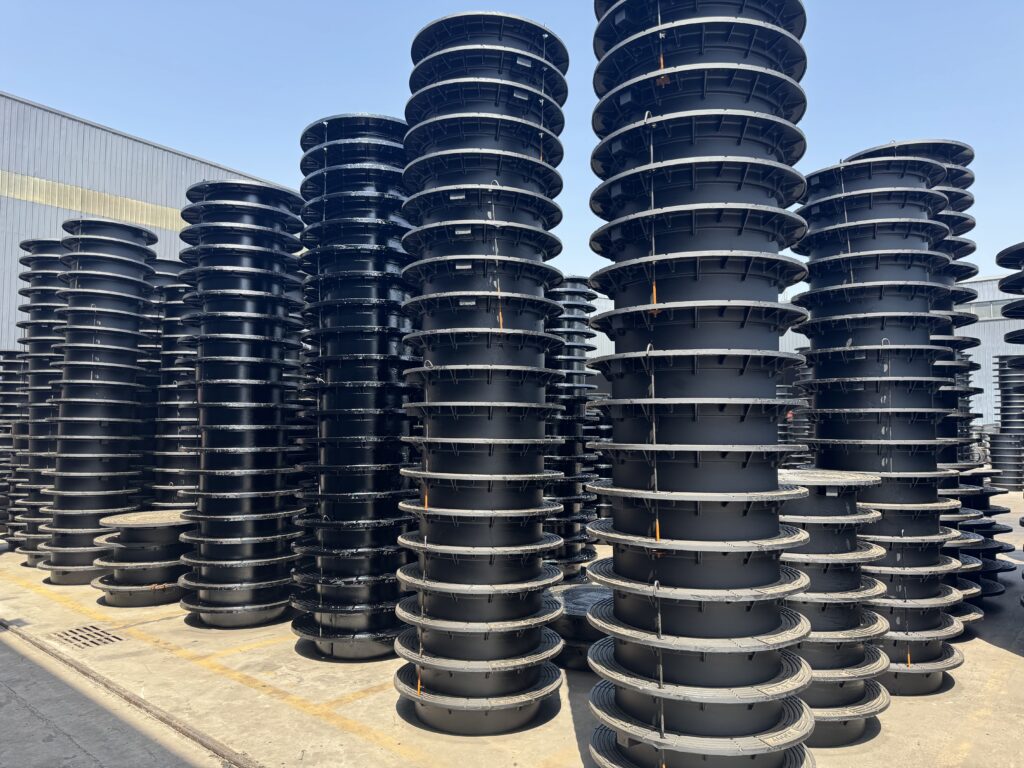
Ordinary covers often rely solely on increasing wall thickness to meet load requirements, resulting in bulky, heavy products. LZB Metal starts from the material source, using QT400-15, QT450-10, QT500-7, QT600-3 multiple grades of high-quality ductile iron, covering full-scenario requirements from sidewalks to ultra-heavy-duty applications. Taking QT500-7 as an example, through the selection of high-purity raw materials and a unique rare earth magnesium alloy spheroidizing treatment, the material achieves a tensile strength stably exceeding 500 MPa, with elongation far surpassing national standard requirements . This material characteristic, combining "high strength with high toughness," allows the cover to absorb energy through micro-deformation when subjected to heavy loads, thus preventing brittle fracture. For the same load rating, LZB Metal products can reduce wall thickness by 10-15%, correspondingly lowering weight while actually improving safety performance. Compared with Saint-Gobain PAM's TEK series using EN GJS 400-15 material , LZB Metal's material provides higher strength reserves while maintaining excellent toughness.
II. The "Topological Optimization" Advantage of Structural Mechanics
LZB Metal has abandoned traditional uniformly distributed rib patterns, introducing finite element topology optimization technology to iteratively refine the reinforcement rib layout of the cover. Taking the 700×800×120mm square outer frame with circular inner core cover as an example, its innovative three-dimensional spatial curved surface reinforcement network automatically "grows" dense, robust support structures in critical stress areas, while optimizing material distribution in low-stress zones to reduce weight, achieving maximum mechanical efficiency. Testing confirms that this optimized design increases the overall stiffness of the cover by over 40% compared to traditional uniform rib designs, ensuring no plastic deformation occurs under long-term heavy loads, while weight is reduced by 15-20% compared to traditional designs. This design philosophy echoes the "non-rock system" of top international brands like Saint-Gobain PAM , achieving equivalent excellent stability with a more compact structure.
III. The "Systematic Innovation" Advantage of Anti-Settlement Structure
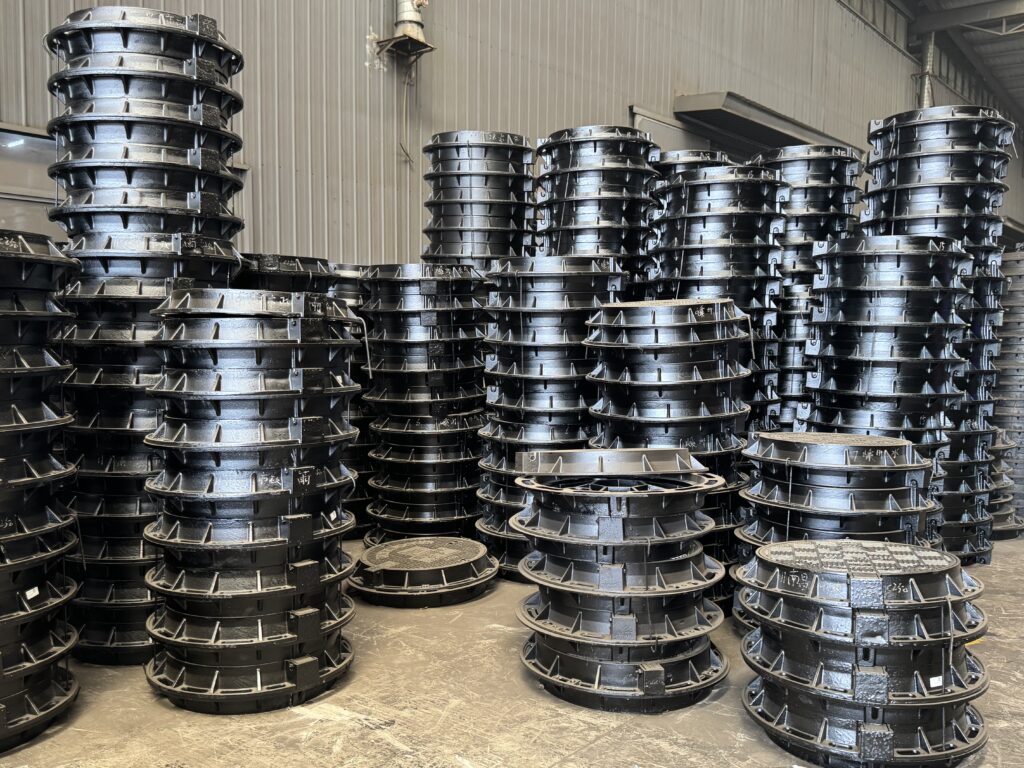
The long-term service performance of a manhole cover depends not only on its inherent strength but also on its ability to work synergistically with the pavement system. LZB Metal's wide-flange structure and integral frame design directly transfer loads borne by the cover to the road structural layers through the bottom extended edge, completely eliminating dependence on backfill soil. Taking the 700×800×120mm product as an example, its 120mm ultra-deep frame combined with a bottom flange width ≥200mm vertically disperses wheel loads to the road base, bypassing the easily compacted backfill soil area, fundamentally solving pavement settlement around the manhole. The EN124 standard's "Pull Out test" specifically requires reliable anchoring systems between cover and frame to prevent "suck-out" effects caused by high-speed traffic . LZB Metal's anti-settlement design not only meets this requirement but achieves superior anchoring performance through structural innovation.
IV. The "Cross-Generational Protection" Advantage of Long-Lasting Corrosion Resistance
The long-term durability of a cover depends not only on its inherent strength but also on the effectiveness of its anti-corrosion system. LZB Metal has constructed a triple-layer anti-corrosion protection system: a base layer of hot-dip galvanizing (zinc thickness ≥80μm) providing cathodic protection, an intermediate epoxy resin coating forming a dense barrier, and a polyurethane topcoat enhancing weather resistance. This entire system passes over 3,000 hours of salt spray testing, ensuring the main structure remains free from corrosion for 30 years in harsh environments. In contrast, ordinary manufacturers often use only simple bitumen coatings , leading to severe corrosion within 3-5 years in coastal areas or northern de-icing salt environments. While international brands like Saint-Gobain also offer epoxy coating options , LZB Metal's triple-layer protection system achieves superior protection at comparable cost.
V. The "Consistency" Advantage of Precision Manufacturing
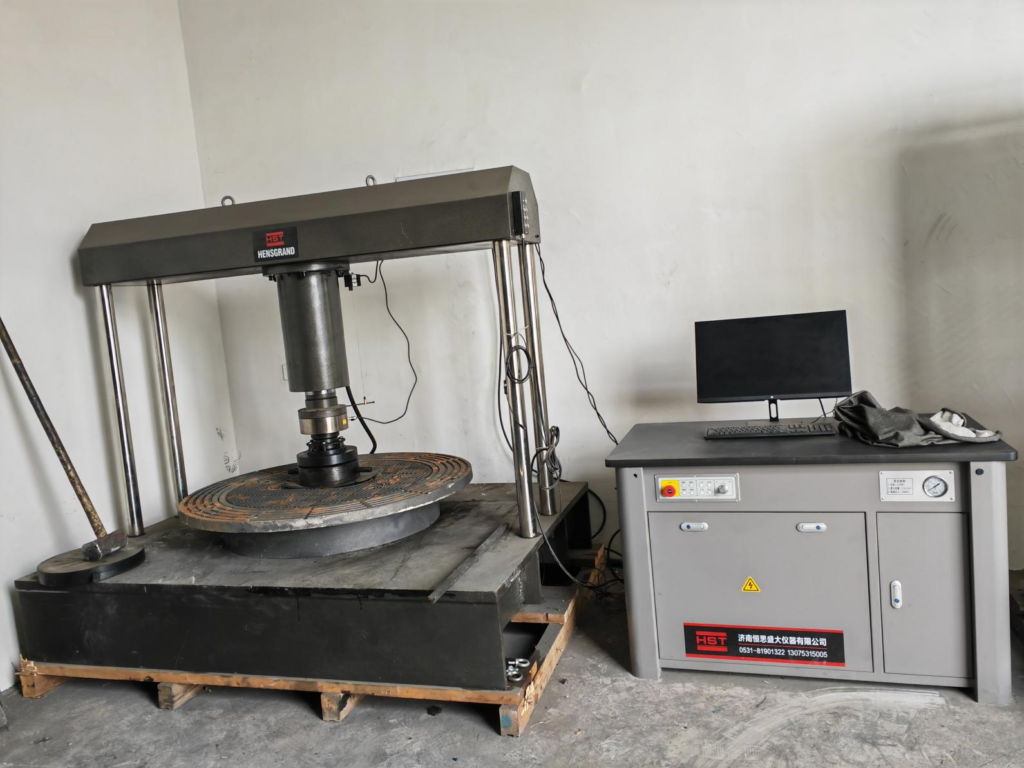
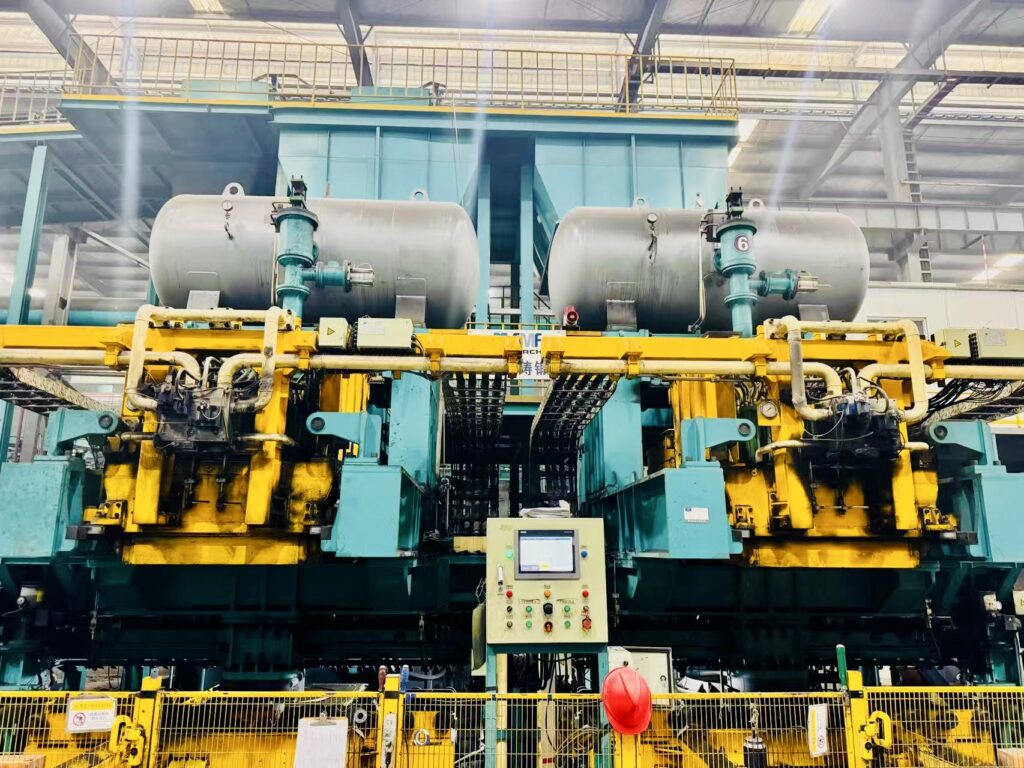
LZB Metal employs intelligent static pressure casting production lines and internationally advanced equipment such as German Eirich sand mixers, with an annual production capacity exceeding 100,000 tons. Through precise control of the solidification process using thermal field simulation, it ensures a dense, defect-free internal structure for large castings, eliminating hidden dangers such as shrinkage cavities and porosity . Its cover-frame fit gap ≤1mm far exceeds the industry standard of ≤2mm, ensuring stable and noiseless operation after installation. Data from furnace analysis, nodularity testing, heat treatment curves, and coating records for each batch of products can be traced, achieving "consistent excellence across every product." This "military-grade" quality control capability ensures precise weight control and extreme performance stability—for the same 120kg F900 cover, LZB Metal's product has a load-bearing capacity more than 15% higher than ordinary products.
Conclusion: The Engineering Philosophy Behind Weight
The weight of a manhole cover has never been an isolated number. It is an engineering expression resulting from the combined effects of material science, structural mechanics, manufacturing processes, and application scenarios. According to EN124 standards, pull-out resistance can be achieved through three methods: physical locking devices, sufficient self-weight (200-300kg/m²), or special interlocking geometries . Through systematic technological innovation, LZB Metal has successfully combined structural optimization with material enhancement, achieving reliable anchoring performance without relying solely on self-weight, upgrading the manhole cover from a mere "heavy component" to an "intelligent, lightweight, durable asset."
For municipal managers, choosing LZB Metal means selecting not just a product that meets standard weight parameters, but a complete engineering solution, validated under extreme conditions, centered on optimizing life-cycle value. Whether pursuing extremely lightweight composite covers or requiring ultra-heavy-duty F900 covers, LZB Metal provides precisely calculated weight designs and indisputable reliability assurance. This is the core of LZB Metal's product superiority over ordinary manufacturers in the dimension of weight.