Ductile Iron vs. Composite Materials: The Manhole Cover Material Debate — Which Will Become the Future Mainstream?
During urban manhole cover selection, procurement managers and designers often face a core question: Ductile iron manhole covers or composite manhole covers — which one should be chosen? Both have their respective advantages and disadvantages. The key to selection lies in — using them in the right places.
Ductile Iron Manhole Covers: The “King” of Heavy-Load Scenarios
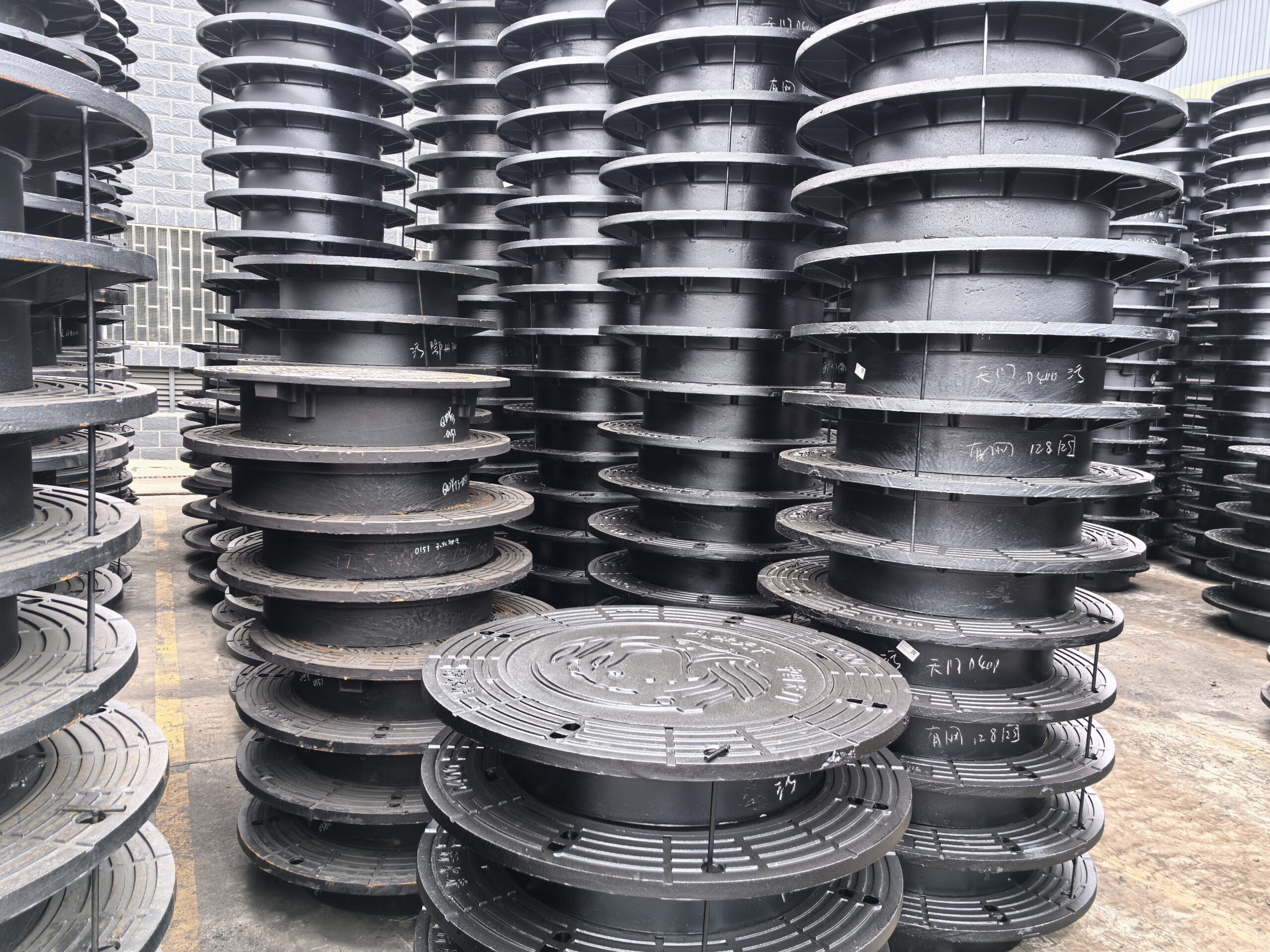
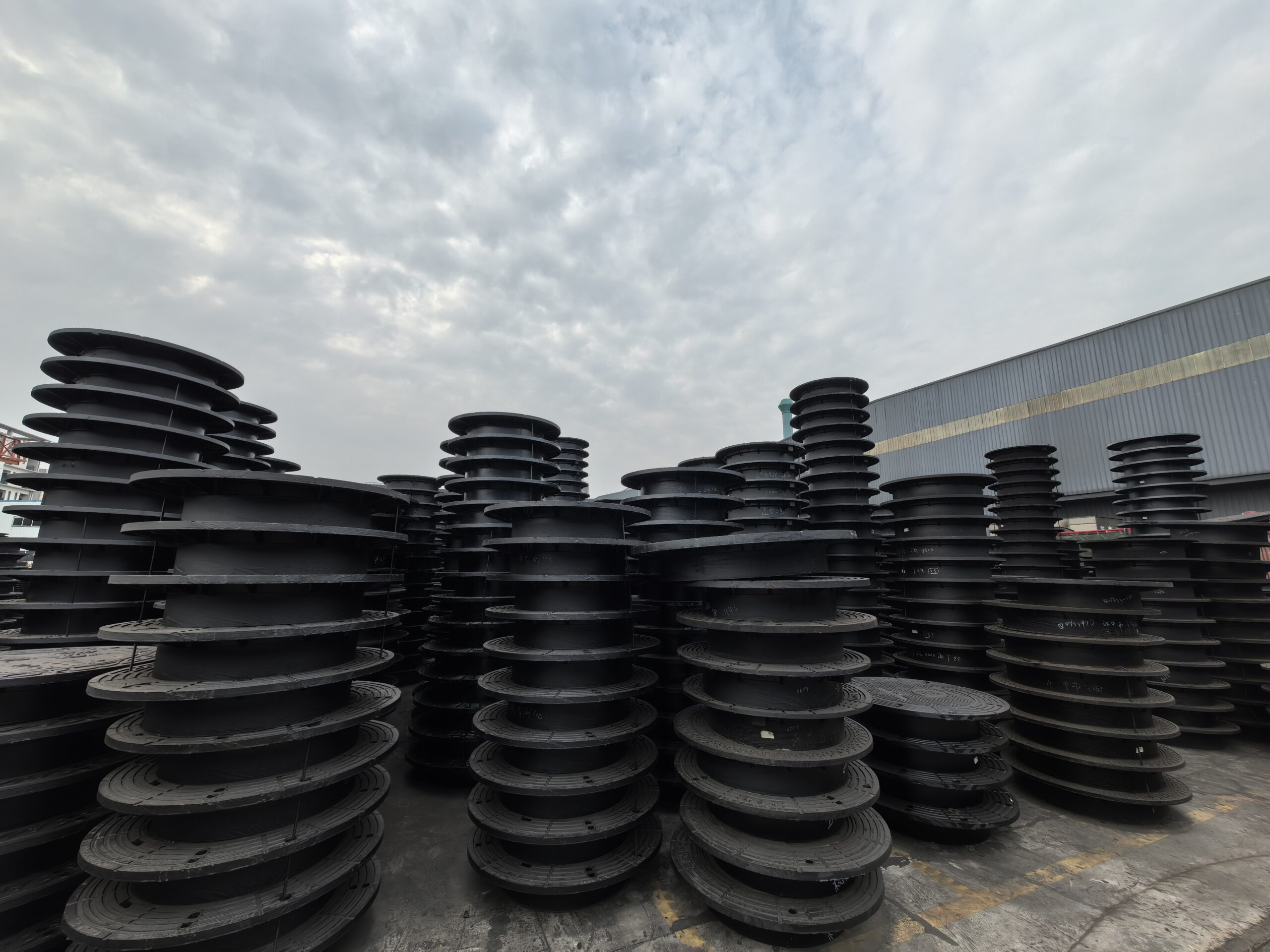
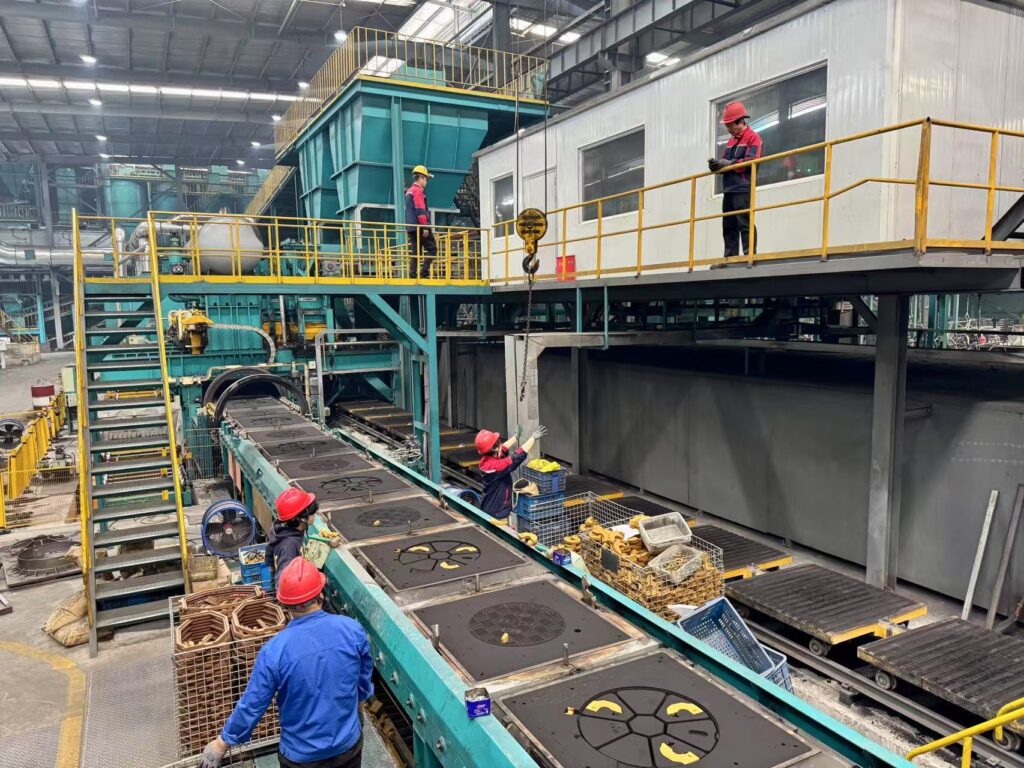
Ductile iron manhole covers use ductile iron as raw material, poured and formed after high-temperature melting. Through spheroidizing and inoculation treatment, the graphite in ductile iron is distributed in spherical form, significantly enhancing the material‘s strength, plasticity, and toughness, with mechanical properties approaching those of steel.
Advantages: Extremely strong load-bearing capacity — heavy-duty covers can withstand over 40 tons of pressure, with D400 class covers bearing 40 tons and E600 class bearing over 60 tons. Suitable for heavy-load areas such as urban arterial roads, highways, and airport runways.
Disadvantages: Heavy weight (e.g., a 700mm diameter cover weighs about 60kg), resulting in higher transportation and installation costs; high iron content makes them prone to theft, requiring additional anti-theft locks.
Composite Manhole Covers: The “New Favorite” for Light-Load Areas
Composite manhole covers use resin as the base material and glass fiber as reinforcement, formed through molding processes.
Advantages: Light weight (only 1/3 to 1/2 that of iron covers), convenient for transportation and installation, greatly reducing labor intensity; no recycling value, naturally anti-theft; strong corrosion resistance, acid-alkali resistant, aging resistant,surface available in multiple colors for easy identification of pipe types.
Disadvantages: Relatively lower load-bearing capacity, mostly below B125 class (bearing 12.5 tons), suitable for light-load scenarios such as sidewalks and green spaces.
Technological Breakthrough: LZB Metal‘s SMC Process Composite Covers Surpass Limits
It is worth special emphasis that the performance of composite manhole covers is not limited to light loads. Hubei Luzhongbao (LZB Metal) uses SMC technology to produce composite manhole covers that perfectly meet or even exceed the E600 load standard, sufficient for ultra-high load special scenarios such as freight stations, docks, and airport runways. This technological breakthrough is rewriting the market’s inherent impression that composite covers can “only be used for light loads.”
Conclusion: No “Best,” Only “Most Suitable”
There is no single “correct answer” for the material selection of urban manhole covers. Ductile iron manhole covers have an irreplaceable advantage in heavy-load scenarios, while composite manhole covers excel in light-load, corrosion-resistant, anti-theft, and other scenarios. However, the rapid iteration of high-performance composite manhole cover technology (such as the SMC process) is continuously expanding the application boundaries of composite materials.When selecting, procurement managers should focus on evaluating factors such as traffic load at the installation location, anti-theft requirements, corrosive environment, and maintenance capabilities, making a scientific and precise choice. After all, regardless of the material, ensuring the “safety beneath the feet” of the city is the ultimate mission of the manhole cover product.